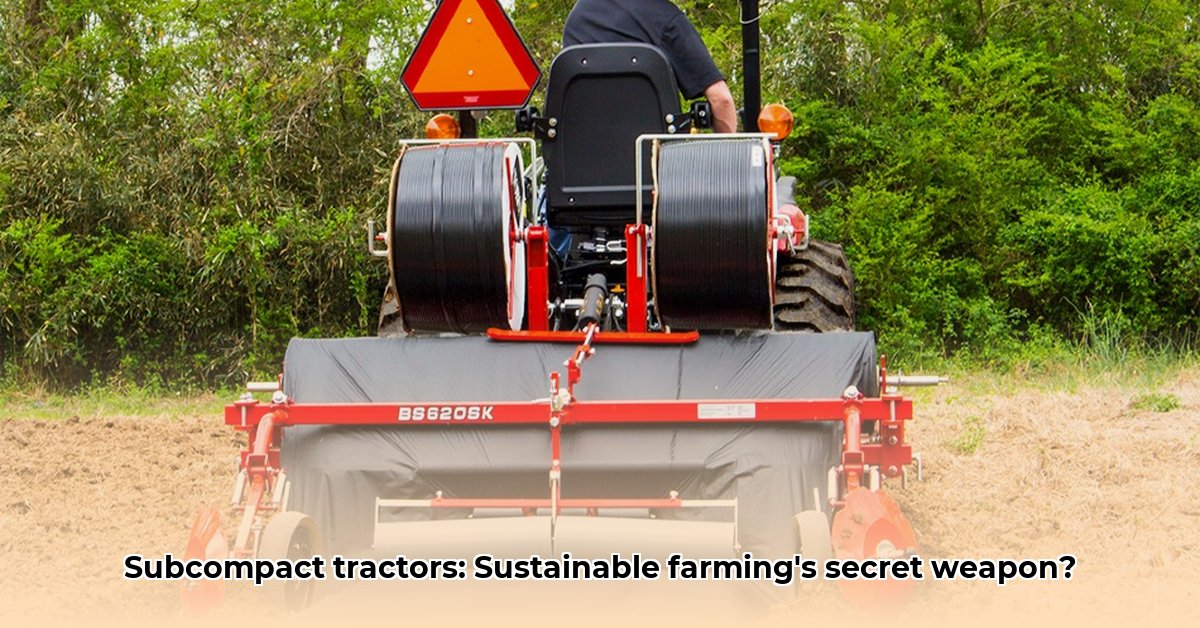
Thinking about maximizing your small farm's output sustainably? Subcompact tractors (SCUTs) are game-changers, but choosing the right implements is key. This guide helps you select and use attachments effectively, boosting efficiency and minimizing environmental impact. Whether you're a seasoned farmer or just starting, this guide provides actionable steps for success. For more information on SCUTs, check out this helpful resource: SCUT information.
Choosing the Right Implements: Your Farm's Toolkit
The perfect implements depend on your specific farming needs. Consider these factors before making any purchases:
- Crop Type: Different crops require different tools. Are you planting rows of tomatoes, sprawling fields of wheat, or grazing animals? Your choice heavily influences which attachments are most valuable.
- Soil Type: Clay, sandy, or loamy soils each require different tools. Heavy clay might demand a powerful subsoiler, while sandy soil needs different implements to prevent erosion. Understanding your soil is crucial for choosing correctly.
- Farm Size: The size of your operation influences the scale of equipment you'll need. Smaller plots need more maneuverable implements than larger acreages.
Exploring the World of SCUT Implements
Let's explore common SCUT implement categories:
1. Tillage Tools: These prepare the ground for planting. Tillers break up soil, while subsoilers address deeper compaction issues. No-till practices are gaining popularity for improved soil health and reduced fuel consumption. The best choice depends on your soil type and farming philosophy.
2. Planting Equipment: Seed drills and planters ensure accurate seed placement for better germination rates and higher yields. Precision planting minimizes waste and helps optimize crop density.
3. Mowing and Pasture Management: Rotary mowers offer versatility, while flail mowers handle tougher terrain and brush. Bush hogs are suitable for larger areas. The ideal choice depends on your specific needs and budget.
4. Material Handling: Buckets move soil, gravel, and manure, while forks handle pallets. Grapples are useful for moving irregularly shaped objects like logs. These attachments significantly improve efficiency.
5. Ground Engagement Tools: Box blades level and grade land, while post-hole diggers are essential for fencing. These tools help improve your farm's overall efficiency.
Sustainability: Farming with a Future
Sustainable agriculture minimizes environmental impact and promotes soil health. Your implement choices play a crucial role:
- Reduced Tillage: No-till or reduced till methods improve soil structure, reduce erosion, and enhance water retention.
- Precision Planting: This technique avoids wasted seeds, lowers herbicide needs, and conserves water.
- Efficient Mowing: Proper mowing techniques and equipment conserve fuel and minimize soil wear.
Matching Implements to Your Tractor: Ensuring Compatibility
Always check your SCUT's specifications before purchasing attachments. Incompatibility can cause damage or inefficiency. Key factors include:
- Lift Capacity: Your tractor has a weight limit; exceeding it can cause serious damage.
- Hydraulic Flow: Some attachments require specific hydraulic flow rates.
- Three-Point Hitch Compatibility: Most implements connect via a three-point hitch; verify compatibility.
Comparing Popular Implement Options
This table compares popular implements:
| Implement | Pros | Cons | Sustainability Benefits |
|---|---|---|---|
| Rotary Tiller | Efficient soil preparation, relatively inexpensive. | Can compact soil if misused, fuel-intensive for large areas. | Reduced-till techniques are possible with careful use. |
| Box Blade | Versatile; leveling, grading. | Limited depth of work; not ideal for breaking up hardpan. | Minimal soil disturbance, promotes good soil structure. |
| Post Hole Digger | Efficient and fast for fence installation. | Can be slow for numerous posts; may require extra manpower. | Reduces labor costs and improves fence durability. |
| Flail Mower | Excellent for tough terrain; mulches well; efficient. | More expensive than rotary mowers; more complex maintenance. | Reduces waste, minimizes need for chemical herbicides. |
Investing Wisely: Building Your Sustainable Farm
Choosing the right implements is a significant investment. It impacts your farm's productivity, soil health, and long-term success. Start with essentials and expand gradually. Remember, sustainable farming is a journey.
Comparing SCUT Attachment Lifecycle Costs for Sustainable Farming
Key Takeaways:
- SCUTs offer versatility for sustainable farming.
- Choosing the right attachments maximizes efficiency and minimizes costs.
- Comparing lifecycle costs involves considering initial price, maintenance, and lifespan.
- Proper maintenance extends lifespan, reducing long-term costs.
- Investing in high-quality attachments proves more economical in the long run.
Isn't maximizing your return on investment a key goal? A well-maintained, high-quality implement can significantly outperform a cheaper alternative over its lifespan.
This fact is further supported by the data: a heavy-duty tiller, while having a higher initial cost, generally exhibits a lower annualized cost thanks to its extended lifespan compared to a basic model.
Lifecycle Cost Analysis
The true cost of an attachment goes beyond its purchase price; consider:
- Initial Cost: The upfront investment.
- Maintenance: Repair costs, parts, and servicing.
- Lifespan: How long the attachment lasts.
This comprehensive analysis reveals the long-term economic value. A cheaper attachment may seem attractive initially, but frequent repairs can negate any savings.
Factors Influencing Lifespan
Several key factors influence attachment lifespan:
- Material Quality: High-quality steel and construction ensure longer life.
- Maintenance: Regular cleaning, lubrication, and storage extend lifespan.
- Usage: Overloading or misuse shortens lifespan.
Careful attention to these factors extends usage before costly repairs become necessary.
Making Informed Decisions
Here’s a step-by-step guide:
- Assess your needs: Determine the tasks your SCUT will perform.
- Research: Explore different models and brands.
- Compare: Consider the total cost of ownership, not just the initial price.
- Seek feedback: Read reviews from other farmers.
- Prioritize quality: Robust, well-built attachments save money long-term.
By following these steps, you'll build a sustainable and productive farming operation. A knowledgeable approach ensures economic and environmentally sound choices.
Example Attachment Comparison
| Attachment | Initial Cost | Estimated Lifespan (Years) | Annualized Cost (over 5 years) | Notes |
|---|---|---|---|---|
| Heavy-Duty Tiller | $1,500 | 10 | $150 | Requires regular maintenance |
| Basic Mower | $800 | 7 | $114 | May rust over time if not stored properly |
| Heavy-Duty Snow Blower | $2,000 | 8 | $250 | Robust design essential for longevity |
This comparison clearly illustrates that the long-term value proposition of higher initial cost implements is justified by their longer lifespans, which leads to a lower overall annualized cost. Remember, choosing wisely lays the groundwork for years of successful, sustainable farming practices.